Search This Blog

Friday, October 15, 2021

Looming US-China Cold War

(Link on Daily Trust)


The breakup of the Soviet Union (USSR) in 1991 marked the end of the Cold War era between it and the United States, which had lingered for more than four decades. 

The world had split into two main blocs: the Western Capitalist bloc led by the United States, and the Eastern Socialist block led by the USSR. That was notwithstanding the so-called Non-Allied Movement, which, though included most of the world’s countries, couldn’t defuse the then prevailing Cold War tensions in the world. After all, they were mere developing countries, which rightly realized that their individual and collective interests lay in being on good terms with both superpowers. Yet, hardly any of them was neutral in the real sense; each country actually aligned with either the US or USSR but without being openly unfriendly to the other. 

It was an era of constant tensions between the two military superpowers that kept the whole world in the persistent nightmare of a looming full-scale war between them; a war which would have caused the annihilation of most of mankind, not necessarily due to direct exposure to the actual battle but the due to the sheer damage that radiological, chemical, biological, nuclear and other weapons of mass murder would have inflicted on the nature and natural resources. 

Interestingly, however, though both countries were always threatening each other, neither was actually serious after all, for both, deep down, realized that a full-scale war between them would definitely end as what military strategists call Mutually Assured Destruction (MAD). Besides, the fear both countries had subjected the world to enabled them to economically exploit and politically manipulate their respective allies on the pretext of protecting them. 

Anyway, though many countries sprang out of the collapsed Soviet Union, Russia, in particular, ended up inheriting all the Union’s most dangerous weapons including nuclear weapon stockpiles. Yet, the Cold War vanished as socialism, the driving ideology of the USSR, fizzled out.

Since then, the United States has enjoyed practically unrivalled influence on the world stage. This is even though over the past two decades President Vladimir Putin of Russia has managed to assert Russian influence in international politics by leveraging the legacy of the former Soviet Union. However, being economically too far behind the US, Russia doesn’t have what it takes to rival the US in global influence, in the long run. The economy of the US state of California alone, for instance, is larger than the whole Russian economy even though Russia is the largest country in the world.

That’s why the US is particularly worried about China’s potential to grow into a formidable challenger to its global influence. After all, unlike Russia, China, which already has the world’s second-largest economy after the US, and is, in fact, expected to overtake it, has what it takes to indeed rival the US in this regard, and even overtake it eventually. 

Besides, China’s ambitious and relentless military buildup and growing commitment to manufacturing super sophisticated conventional and non-conventional weapons and other military equipment suggest its determination to rival the United States in military power. Also, though it’s still quite far from there while the US continues to advance further militarily, the rate at which China is equally advancing poses a serious challenge to the US military superiority in the world. 

The US is increasingly concerned anyway knowing the implications of China’s potentially dominant economic and military power on its global influence. Interestingly, as I have always argued, notwithstanding the supposed sophistication of the modern age, military power remains the underlying determinant of a country’s influence in international politics. That’s why, due to their relative weakness militarily, countries like Japan and Germany, which have the third and fourth world’s largest economies respectively, lack influence befitting their respective strength economically and technologically. That also explains why countries with geopolitical or global ambitions prioritise appropriate military buildup, sometimes even at the expense of their economic wellbeing, in pursuit of geopolitical or global influence. 

Anyway, since the beginning of the Joe Biden administration earlier this year, the US-China face-off has persistently escalated. His predecessor, Donald Trump focused more on the trade aspect of the face-off. Because the Wall Street-inspired businessman-President, who looked at things strictly from a profit-loss perspective, wasn’t enthusiastic about any US foreign commitment he believed wasn’t worth the funds spent on it, regardless of its real or perceived significance in maintaining US dominance on the global stage. Instead, fetching money to the US treasury was all that mattered to him. He was ruthless in his characteristic extortionist approach that spared no one including the US traditional allies in Europe, who he insisted increase their budgetary contribution to NATO to keep US commitment to “protecting them”, and other US allies in the Middles East and Asia e.g. the Arabian Gulf States, Japan and South Korea, which he equally demanded pay more in return for continued US military “protection”. 

However, with the return of the status quo ante in Washington, which President Biden represents, the US is now fully back on its established foreign policy; it’s now particularly hell-bent on undermining China’s rise in military power. It has been reducing its military commitments in various parts of the world and reinforcing its naval, ground and air force bases scattered all-around China and international waters. 

Meanwhile, as tensions grow between the two giants, another Cold War-era looms on the horizon while proactive countries are considering different strategies that would safeguard their respective interests in the imminent China-US Cold War without having to align with either against the other. 

Friday, October 8, 2021

Geopolitical dynamics of Nagorno-Karabakh conflict

(Link on Daily Trust)


Renewed tensions have risen over the past few weeks on the Azerbaijan-Armenia border as Turkey and Pakistan joined Azerbaijan in joint military exercises to emphasize their commitment to supporting it against Armenia in their lingering conflict over the mountainous Nagorno-Karabakh enclave in the South Caucasus between Eastern Europe and Western Asia. 

Another intended recipient of the message behind the joint military exercises is Iran, being particularly committed to providing military support to Armenia against Azerbaijan. And it obviously got the message hence responded by conducting unprecedented military exercises on its border with Azerbaijan. 

By the way, in international politics, a publicized military exercise is always meant to convey some subtle but serious warnings to the intended target. And depending on the situation, the intended target may condemn it, or react with a counter publicized military exercise, or simply feign indifference to save face and avert further escalation. 

In addition to Iran, Russia has equally supported Armenia in the conflict even though, unlike Iran, it has obviously relented in recent years to the extent of appearing practically neutral, which partly explains the relative ease with which Azerbaijan, albeit supported by Israel and Turkey, managed to reclaim almost the entire enclave last year after thirty years under Armenian occupation.  

Though the Nagorno-Karabakh enclave is an Azerbaijani territory, it’s largely populated by the Armenian ethnic minority. Also, though the conflict is more than a century old, it had been overtaken and contained by the Union of Soviet Socialist Republic’s annexation of both Azerbaijan and Armenia. It only began to resurface towards the collapse of the Soviet Union when the first ethnic conflict between Azeris and Armenian secessionists erupted in 1988. 

Under the then steadily weakening Soviet Union, and shortly before its collapse, Azerbaijan declared its independence while the Armenian-dominated parliament of the then autonomous Nagorno-Karabakh voted for annexing the enclave to Armenia. Also, in a controversial referendum, which was boycotted by the Azeris, the Armenian ethnic minority voted for secession from Azerbaijan.  

Following the eventual collapse of the Soviet Union in 1991, Armenia and Azerbaijan, among other former constituents of the Union, emerged as duly recognized sovereign states. However, a few months afterwards, war erupted between them and lasted until 1994 within which both ethnic Azeris and Armenians perpetrated ethnic cleansing against each other.

Now, as in every conflict with external dynamics, foreign governments motivated by their respective legitimate and illegitimate interests have been partly responsible for the protraction of the Armenia-Azerbaijan conflict over Nagorno-Karabakh. 

All along, Russia, which rightly or wrongly considers itself the patron of Orthodox Christianity in the world took sides in favour of Armenia, which is equally a predominantly Orthodox Christian country. Also, with its sheer economic and political influence in Armenia, Russia regards it as part of its exclusive sphere of influence. 

On the other hand, Turkey’s support for Azerbaijan against Armenia is partly motivated by the historical hostilities between Turks and Armenians, which have always been the underlying dynamics behind the protracted tensions between Turkey and Armenia. Besides, Turkey has always considered itself the patron of the ethnic Azeris among other ethnicities across the South Caucasus who were historically Turks. Azerbaijan is also one of the sources of natural gas for energy-hungry Turkey. 

On its part, Pakistan’s support for Azerbaijan against Armenia is basically in reciprocation for Azerbaijan’s support for Pakistan against India in their dispute over the disputed Kashmir region. Yet, its increased military involvement in Azerbaijan- Armenia conflict against the latter suggests a deliberate move to secure a firmer foothold in the region’s geopolitical power struggle. 

Likewise, Iran is deeply involved in the conflict and has hugely supported Armenia militarily. Interestingly, though Iran views itself as the patron of the Shi’a in the world, it ironically supports Orthodox Christian Armenia against Azerbaijan, which is not only equally Shiite but the biggest Shiite country in the world for that matter, percentage-wise, for the Shi’a constitute more than 85% of its almost 10 million population. However, it does not recognize the spiritual supremacy of Iran’s Supreme Leader, while Iran, as it does everywhere, maintains a militia called Husainiyyoon in the country, which is loyal to the Supreme Leader in Tehran.    

Anyway, though Iran is a Persian elite-dominated theocracy, ethnic minorities in the country constitute a sizeable percentage of its population. The Azeris constitute more than 20% and may amount to 40% when combined with other Turkic-origin ethnic minorities in the country. Also, while they are largely marginalised, a few individuals among them who have discarded their ethnic origins and effectively turned Persian have held important positions in the theocracy. The Supreme Leader, Ali Khamenei, is himself ethnically Azeri. 

Iran has always been worried about the steady rise of a nationalist tendency among its ethnic minorities, especially the Azeris who the regime suspects of harbouring secessionist tendency to form a separate entity or merge with their fellow Azeris across the border in Azerbaijan. It’s equally worried about the growing Turkish influence among the Azeris and other Turkic-origin ethnic minorities in Iran, which Turkey may manipulate to politically blackmail it.  

Meanwhile, Israel, which already has diplomatic relations with Azerbaijan, took advantage of the situation supporting Azerbaijan with advanced weapons and intelligence thereby achieving its main objective i.e. securing a foothold in Azerbaijan to run its subversive operations against Iran just across the border. Israel has been desperate to secure as many military footholds as possible across Iran’s borders to counter its similar footholds across Lebanon-Israel and Syria-Israel borders. 

With active Israeli Mossad and military presence in Azerbaijan, it’s believed that Israel’s recurrent attacks on selected targets in Iran have always been launched from neighbouring Azerbaijan. Likewise, Mossad’s assassinations of Iran’s nuclear program officials were believed to have been masterminded from there. 

Now, though the United States and other major players in international politics pursue their respective interests in the conflict, it’s obvious that it’s not of particular concern to any of them anyway.

Friday, August 20, 2021

Return of Taliban: The Doha deal

(Link on Daily Trust)


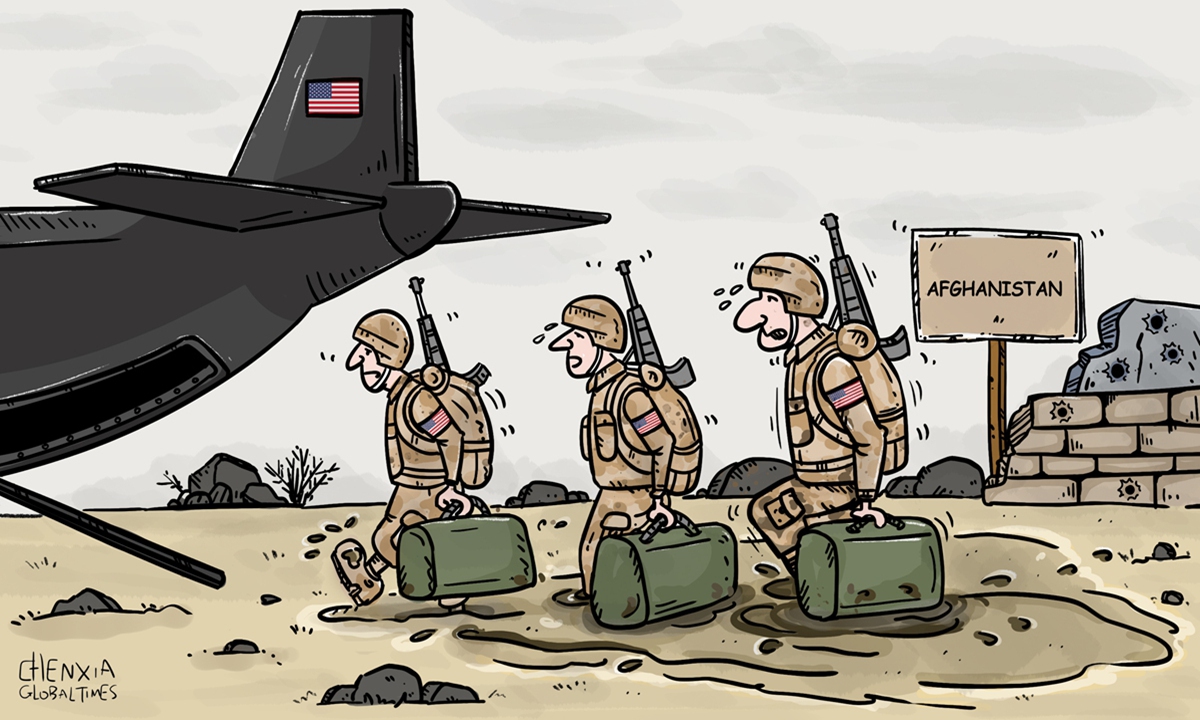
As expected, the Taliban’s dramatic and largely unresisted advance has culminated in their return to power in Afghanistan 20 years after they were overthrown by the US invading army in pursuit of Osama bin Laden and Al-Qaida members who it believes were behind the September 11, 2001 attacks in Washington and New York. 

Interestingly, contrary to the general assumption, the United States has never designated the Taliban as a terrorist organization; it only accuses the group of cooperating with some of the most dangerous groups on its terror list i.e. Al-Qaida and its affiliates; an inconsistency that can best be described as “ba cinya ba, kafar baya”. 

Just like every other country, the US only designates a group or individual as a terrorist based on its interests. The lack of absolute unanimity on the definition of terrorism explains why a terrorist in the eyes some may be a freedom fighter according to others. 

Now, as much as the return of the Taliban to power has generated all sorts of explanations, it left many people wondering what explains the circumstances surrounding the development as a whole. 

Though the US overthrew the Taliban regime in 2001, it soon began to realize that the country was too complex for a mere regime change to change it. Also, after pumping hundreds of billions of dollars into the country over two decades to create and nurture a reasonably stable US-allied state with adequately equipped and well-trained security personnel, the country’s underlying ethno-cultural and socio-political peculiarities, which the US couldn’t take into consideration, undermined and eventually frustrated its efforts. 

Following their defeat in 2001, the Taliban turned to guerilla warfare tactics killing more than 2,000 US military and security personnel over the two decades, and, of course, exhausting the Afghan army and security personnel.

The US began to grow increasingly frustrated as it was spending massive resources and losing its military personnel to the Taliban attacks in an impoverished and landlocked country with neither instantly exploitable resources nor or any strategic importance to it. Besides, the country had ceased to pose any significant threat to the US following its elimination of Al-Qaeda and other foreign fighters in the country. 

Also, the largely apathetic Afghan military personnel were still incapable of tackling the Taliban unaided. Equally, the largely corrupt Afghan military and political elite were neck-deep in systematic misappropriation of the country’s already meagre and mostly US-provided resources. They also couldn't grow beyond their respective, tribal, regional affiliations and other deep-seated prejudices. 

Therefore, and clearly with prior approval, if not an order, from Washington, Qatar reached out to the Taliban to broker a deal between it and the United States. 

Interestingly, Qatar is a tiny but superfluously rich Arab Gulf state hugely obsessed with geopolitical influence disproportionate to its size. It pursues its agenda by investing massively in sponsoring anti-establishment political groups and non-state actors in various countries across the Middle East and North Africa (MENA region). It equally provides them with media platforms on its influential Aljazeera satellite television network, which it also uses to glorify them and demonize their respective governments thereby constantly putting itself at loggerheads with various governments in the region.   

Anyway, around the beginning of 2010, Qatar effectively adopted the Taliban, following which the group’s leaders were politically refined in its capital, Doha, over the subsequent years within which talks were held between the group’s representatives and their US counterparts. 

Also, in 2013, Qatar established the Taliban’s political bureau in Doha, which was the first and only one of its kind, to institutionalise contacts between them and the United States in the atmosphere of irresistible luxury and glamour away from Afghanistan.  

Since then, the Taliban has been increasingly involved in international diplomacy acquiring considerable skills in the process that on different occasions it managed to blackmail the US into making concessions by capitalising on its desperation to pull out of Afghanistan without jeopardizing its interests. 

The Taliban representatives also visited the capitals of some major international and regional players for talks with governments’ officials and representatives of international bodies. 

Besides, all through the US-Taliban negotiations in Doha, the former had effectively treated the latter like a substantive government, not a group, leading to the ratification of the deal between them in February 2020. For instance, the deal provides, among other things, that the US would withdraw its forces from Afghanistan, while the Taliban, in return, agreed not to harbour or allow anyone or group threatening the security of the United States or its allies to operate in the country.  

After all, from the way the US pulled out of the country, it was clear that it effectively handed it to the Taliban on a silver platter. Equally, the reactions of the other world powers, which suggest no surprise, imply that they were at least privy to, if not part, of the whole thing all along.  

Now, though the new Taliban government would be different from the pre-2001 Mullah Omar-led government, it wouldn’t necessarily live up to the US expectations. Yet, as long its grip on power doesn’t threaten the US security or jeopardise its interests, any other excesses it may commit would be overlooked. 

Friday, August 13, 2021

Looming scenario in Afghanistan

(Link on Daily Trust)


The rate at which Afghanistan districts and cities are falling to the Taliban since the withdrawal of the US forces brings back memories of the mid-90s when the group was rising to power in a similar pattern, leading to the fall of the capital, Kabul in 1996. 

As a young international affairs enthusiast then, and even though with limited understanding of the geopolitics and other dynamics of the situation, I interestedly followed the developments. 

Afghanistan was invaded by the then Union of Soviet Socialist Republic (USSR) in 1979, following which local resistance groups known as the Mujahedeen sprang up to resist the invasion. Meanwhile, the global power struggle between the US-led capitalist West and the Soviet-led socialist East was still raging. 

As either country was determined to undermine the influence of the other, the US was committed to forcing the Soviet Union out of Afghanistan. However, faced with the absence of any reliable local allies to manipulate, the US decided to pursue its goal by riding the wave of the then-popular Jihad sentiment against the Soviet invasion of the country. 

The Central Intelligence Agency (CIA) managed the intelligence aspects of the US support to various Mujahedeen groups, while the State Department managed its diplomatic aspects. Also, thanks to the US-influenced global media narrative about the Mujahedeen, sympathy for them and their cause skyrocketed especially across the Muslim world and among Muslim communities the world over. 

Passionate supplications for Allah to grant the Mujahedeen victory became part and parcel of Muslim supplications particularly in Friday Sermons, Taraweeh and Tahajjud in Ramadan. Tales of the extraordinary heroism of the Mujahedeen, many of which turned out to be fabricated, were systemically popularized, which inspired thousands of Muslim volunteers across the world to travel to Afghanistan and join the Jihad. Many of such volunteers especially those from the rich Gulf Arab countries and western countries abandoned lives of luxury to endure extreme hardship and stress in Afghanistan.  

Anyway, the Mujahedeen managed to force out the Soviet Union from Afghanistan in 1989, and in 1992 managed to overthrow the government it had installed. However, the hitherto united Mujahedeen groups turned against one another in a bloody power struggle plunging the country into unprecedented chaos. 

Meanwhile, neighbouring Pakistan, which must have lost a considerable amount of its influence over the feuding former Afghan Mujahedeen groups was increasingly worried over the potentially destabilising implications of the situation on its security and stability. It, therefore, facilitated the formation of a group of Afghan refugees in Pakistan known as the Taliban to tackle all the feuding armed groups in Afghanistan.

Soon, the group began to attract many disgruntled nonpartisan Afghans and, of course, attracted those foreign volunteers most of whom were Arabs. And with the support of the Pakistani intelligence agency, the Taliban fighters began to sweep away those former Mujahedeen groups from Afghanistan districts at a dramatic rate, which culminated in the fall of the capital and the emergence of the Taliban government in 1996.  

However, following the September 11, 2001 attacks in New York and Washington DC, which the United States accused Osama bin Laden of masterminding, the US demanded that the Taliban government surrender Bin Laden to it. The then Taliban leader, Mullah Muhammad Omar insisted that they would only surrender him if the US furnished them with irrefutable evidence of his involvement. The US invaded Afghanistan anyway, overthrew the Taliban government, and had since been there before its withdrawal recently. 

Interestingly, though the US had installed and sustained successive Afghan administrations in the country, it failed to raise a substantive government strong enough to provide and maintain peace and stability, which explains the persistence of the Taliban’s activities all through in the countryside and remote areas. The largely corrupt Afghan political elites were holed up in their respective fortresses in the capital, Kabul, and other cities. They had apparently taken the protection they enjoyed from the US army, for granted. They never believed that the US would follow through with its withdrawal at least at this moment given the procrastination of successive US administrations on the matter.  

Now, given the rate at which the Taliban is advancing across the country, overthrowing the already shrinking government in Kabul could be just a matter of time, barring any major development that may prevent it. However, that may not necessarily translate into the return of the Taliban government, after all. Because in the absence of any superpower in the country, there are now some regional powers pursuing their respective interests and agendas. Pakistan, Turkey and Iran are particularly active in this regard.

Pakistan, being ethnoculturally, religiously, socially, politically and geographically closest to Afghanistan, is, of course, interested in Afghanistan’s affairs. It is strategizing to play appropriate roles in shaping Afghanistan’s political future.  

Also, though Turkey doesn’t have shared borders with Afghanistan, it’s determined to impose its influence on the country’s political future in the context of its geopolitical expansionism. After all, its troops are already in the country supposedly as part of the NATO mission there. 

Equally, neighbouring Iran has been increasingly involved in Afghanistan in pursuit of its agenda, which is much more complex than that of the others. Likewise, its approach is different from that of the others. 

As it has always done to infiltrate wherever it targets, Iran is already busy creating armed militias among the Hazara Shiite minority in Afghanistan, and preparing them to grow into a formidable purportedly Afghan political block but loyal to Iran in reality through which it can influence things in the country. 

Now, as things stand, the fall of Kabul may unleash uncontrollable chaos in the country, which underscores the imperative of arresting the situation before it’s too late.  

Friday, August 6, 2021

Resignation to the reign of terror

(Link on Daily Trust)


In 2010, the first civilian governor of Kano State, Alhaji Muhammadu Abubakar Rimi, died of a shock-triggered cardiac arrest following a robbery incident on his way from Bauchi to Kano. His brother who was with him in the same chauffeur-driven vehicle narrated how, shortly after the incident, Rimi lamented in shock that the robbers were Fulani. Though they didn’t physically harm them, Rimi’s condition deteriorated, leading to his death. 

Of course, if Rimi’s reference to the robbers’ ethnic identity were nowadays, it wouldn’t prompt wonder for obvious reasons. It’s, therefore, necessary to understand the context in which he made the remark to appreciate why the robbers’ ethnic identity was of interest to him at that particularly tense moment. 

The incident happened against the backdrop of growing controversial speculations that some Fulani pastoral nomads were increasingly taking to armed robbery. It was difficult then to even imagine a Fulani pastoral nomad committing armed robbery. Perhaps, except who had actually fallen victim to it, or had known of a confirmed case, no one would believe that a typical Fulani fellow could even contemplate turning into an armed robber. 

The characteristic ultra-conservatism, excessive, in fact, counterproductive contentment, modesty, and real or perceived naivety of the Fulani, in particular, explained that general assumption about them, and indeed explained Rimi’s shock and frustration, being a Fulani himself. 

Interestingly, albeit to a lesser extent, a similar reaction must have trailed the beginning of the involvement of some Hausa folks in armed robbery, a few decades earlier, for, though Hausa and Fulani are ethnically different, they share a lot in common, with the former being typically the “refined” version of the latter in many aspects.    

Anyway, since that robbery incident, the reality has done away with those speculations. While armed robbery, banditry, kidnapping, or any other crime isn’t limited to any particular ethnic group, the growing involvement of some Fulani folks in them remains particularly interesting due to the foregoing reasons.

Besides, over the past decade within which the traditional highway armed robbery has effectively disappeared as travellers no longer take unnecessary amounts of cash with them thanks to the growing penetration of electronic money transaction technology, those Fulani folks have switched to the increasingly “lucrative” banditry and kidnapping. 

Also, though not all bandits and kidnappers are Fulani, the coincidental dominance of Fulani in the crimes in northern Nigeria has changed the image of a typical Fulani pastoral nomad from a herd-rearing, stick-wielding, innocent-looking, shabbily clothed, and pity-arousing fellow, to an AK47-wielding, motorbike-riding, and panic-arousing thug. 

Now, caught between that reality, on the one hand, and the persistent government failure to guarantee people’s security, on the other, many communities especially in northern Nigeria have resigned themselves to the reign of terror in their respective communities. They have come to terms with whatever dangerous security situation they have been exposed to by bandits and kidnappers. 

Peasant farmers in some communities, for instance, negotiate with bandits to allow them to utilise their own farmlands while they, in return, pay a fortune to the bandits or provide services to them, which include supply and logistics, and even a cover-up to enable them to elude the security agencies. Other communities would raise a fortune and hand it to the bandits in return for their safety for some time, yet they may still be vulnerable to raids by other bandits or even the very bandits who extorted them. 

Resignation to the reign of terror isn’t only noticeable in remote and rural areas; urban dwellers have equally resigned themselves to it. The scope of suburban communities repeatedly raided or vulnerable to raids by motorbike-riding kidnappers breaking into homes and kidnapping people is steadily widening. 

Besides, given the huge amounts of ransom that families pay to rescue their loved ones kidnapped from home or on highways, cases of urban kidnapping of individuals by familiar and otherwise trusted amateur but equally lethal undercover kidnappers lurking among families or in neighbourhoods, are becoming too common to prompt a surprise. 

There have been cases of neighbours, family friends, and domestic helps kidnapping or facilitating the kidnapping of individuals in the very families that trust them. In fact, there have been cases of relatives kidnapping their relatives, brothers kidnapping their younger siblings, and husbands kidnapping their wives.

From a typical recorded phone negotiation conversation between family members whose loved ones were kidnapped and the kidnappers over the amount of ransom and how it should be delivered, it’s very obvious that people have lost confidence in the authorities, and have indeed resigned themselves to the “new normal”.  

Also, travellers are increasingly settling for relatively inconvenient rail travel where the service is available, while others including those who can barely afford it opt for air flight.   

There are also many other instances of people’s resignation to the reign of terror in the face of the failure of the authorities to live up to their responsibilities. After all, that’s quite understandable. Because in an increasingly hopeless situation where, for instance, a gang of bandits would simply descend on supposedly protected government schools and herd students into the bush, whatever concession or desperate move that vulnerable communities and individuals make for the security of their lives isn’t only justifiable but is actually the only right thing to do. 

Though resignation to the reign of terror is suicidal in the long run, it remains the only option for the vulnerable while the shame and blame rest with the authorities who have failed them.